
February 2
Charlotte:
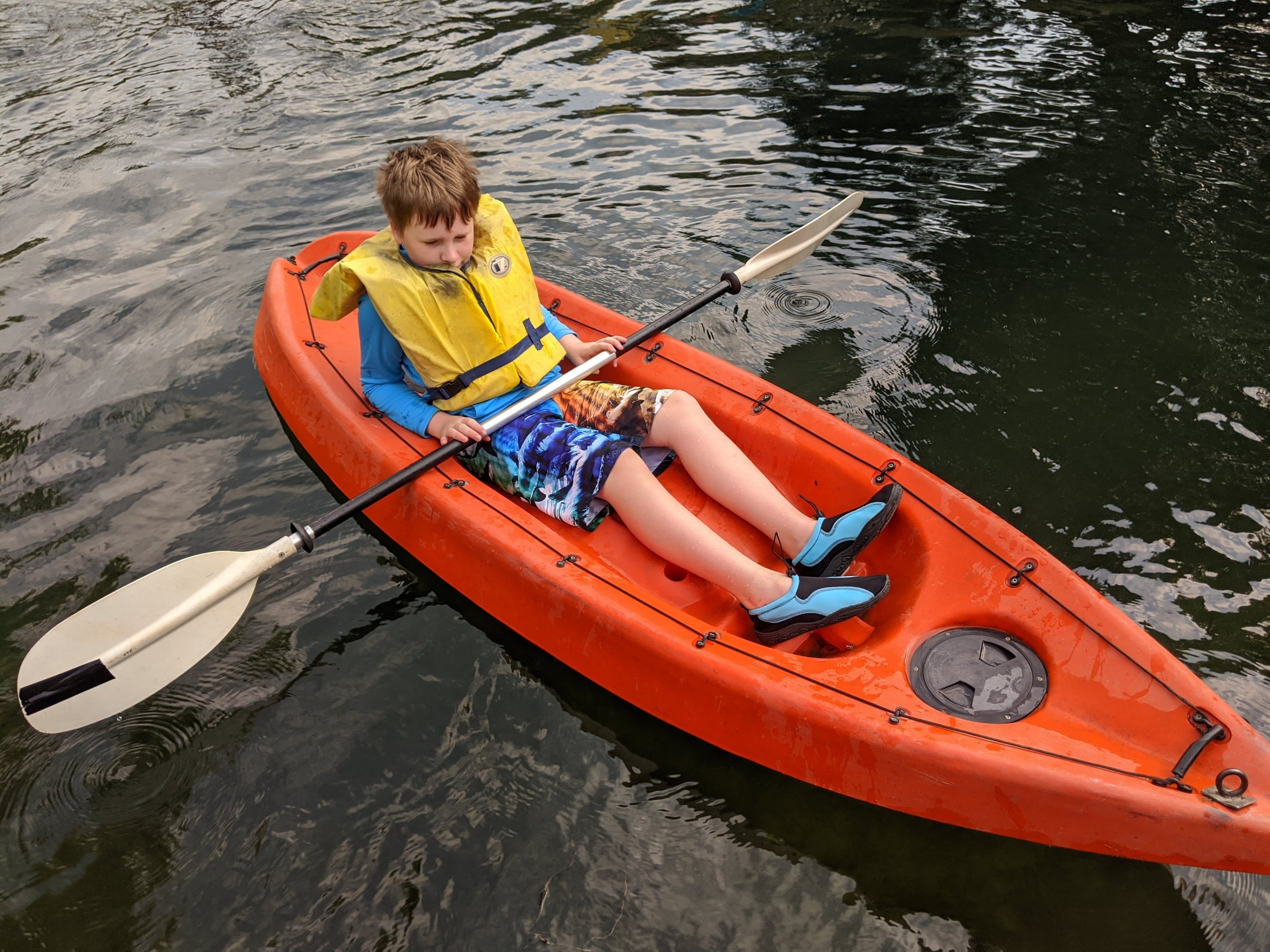
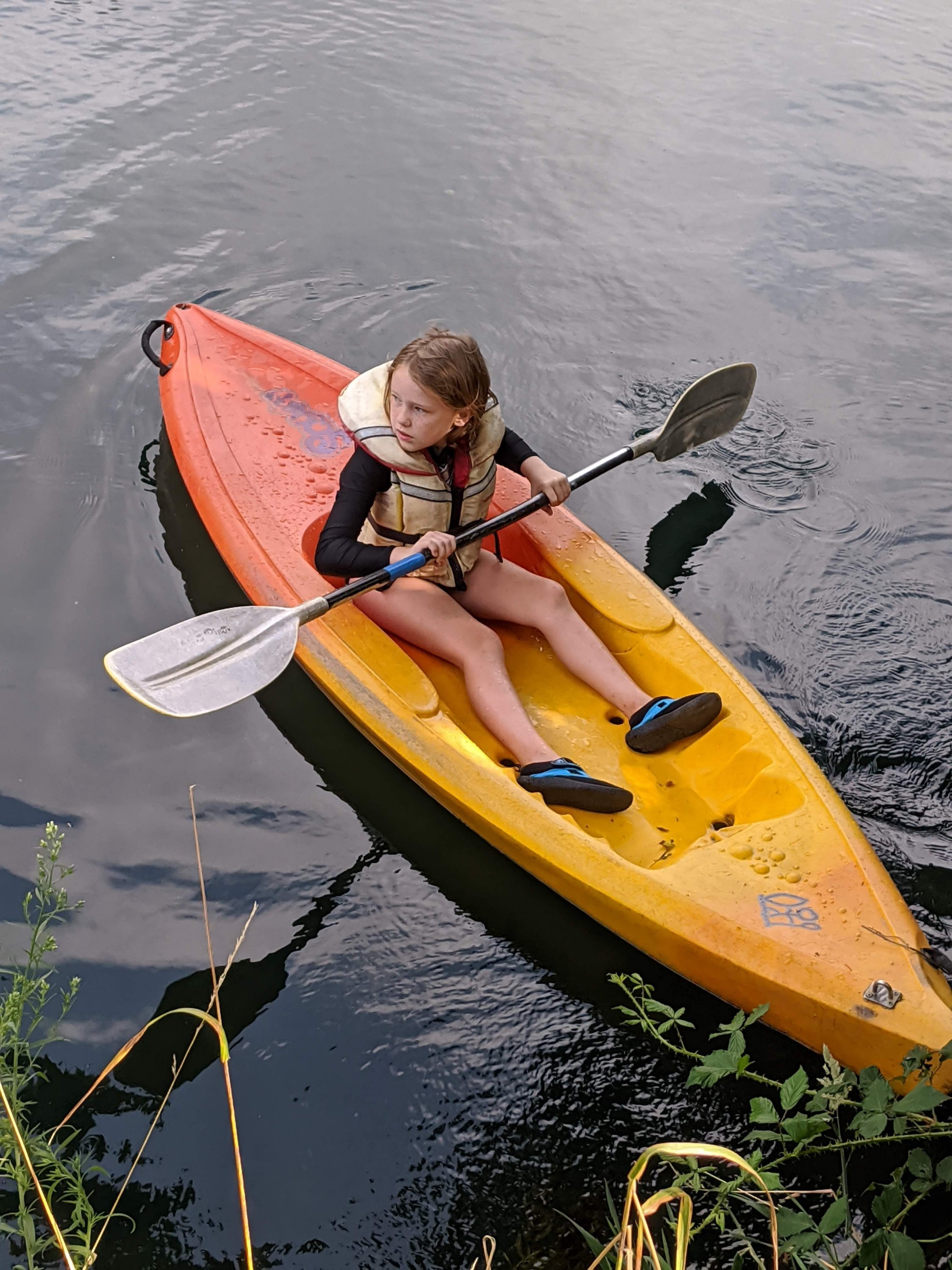
We woke up and Sam and I went to go kayaking. At the campground where we were staying, we were allowed to use kayaks for free. (There was also a trampoline that I jumped on for quite awhile.) It was harder than I thought it was going to be. I kept kayaking into bushes, but after awhile, I got the hang of it. There was a longer river trail that Dad and I went on together because kids needed adult supervision. On the trail we saw a little island that had grass on it. I wanted to go on it, but I did not because it probably was not safe. Then we kayaked back and got ready to go.


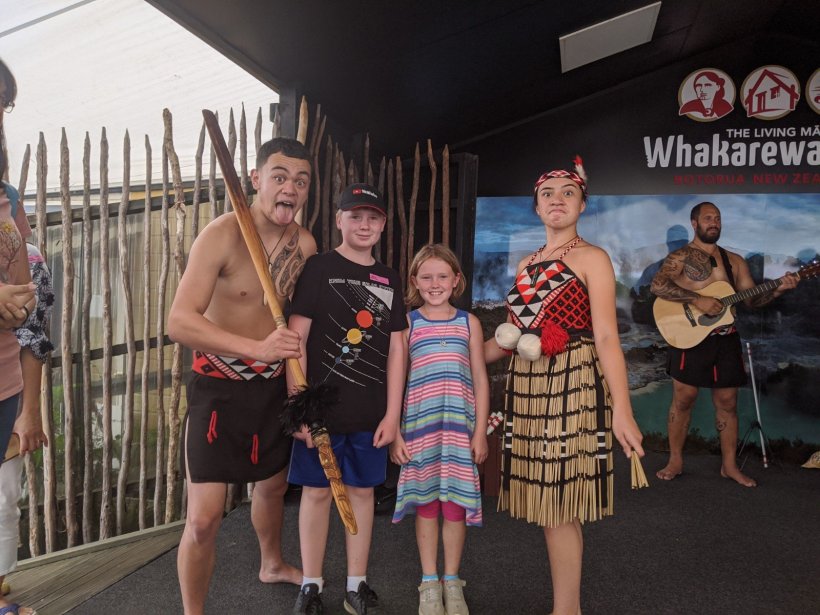
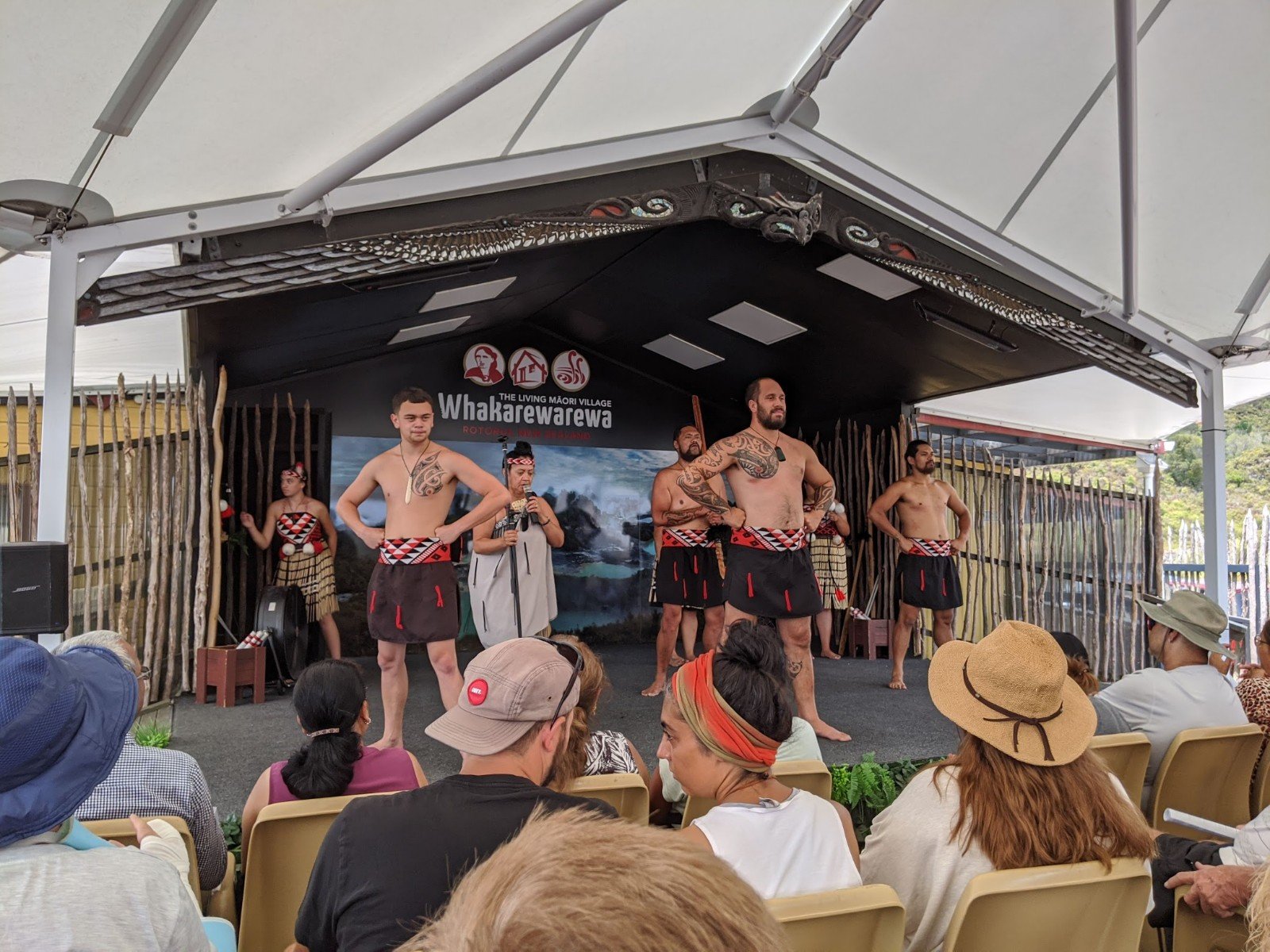
We went to see a show in Tewhakarewarewa (Whakarewarewa or Waka, for short), a living Maori village in Rotorua. Rotorua is a town that smells of sulphur because the whole town is built on top of tons of geothermal steam vents.


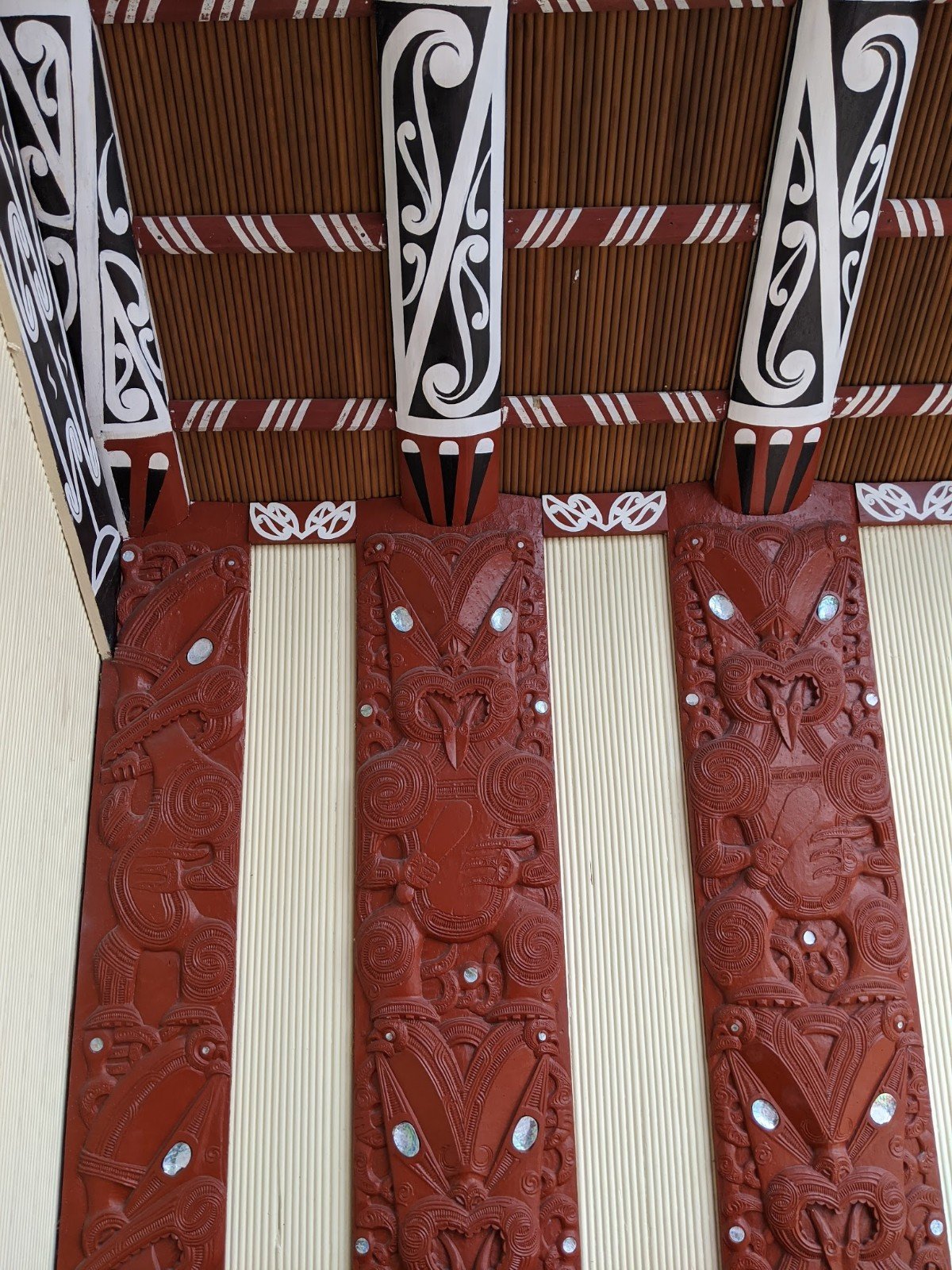
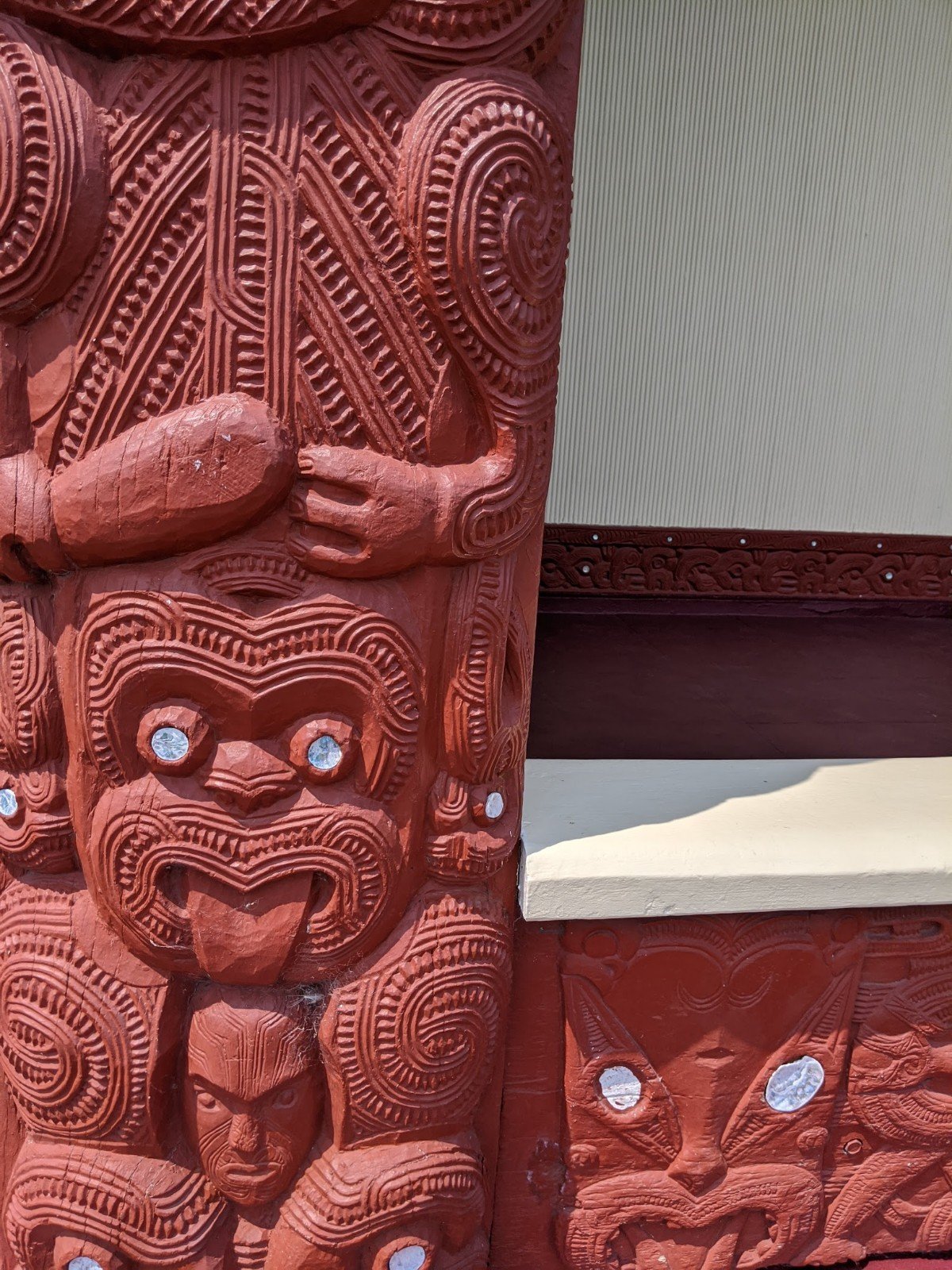

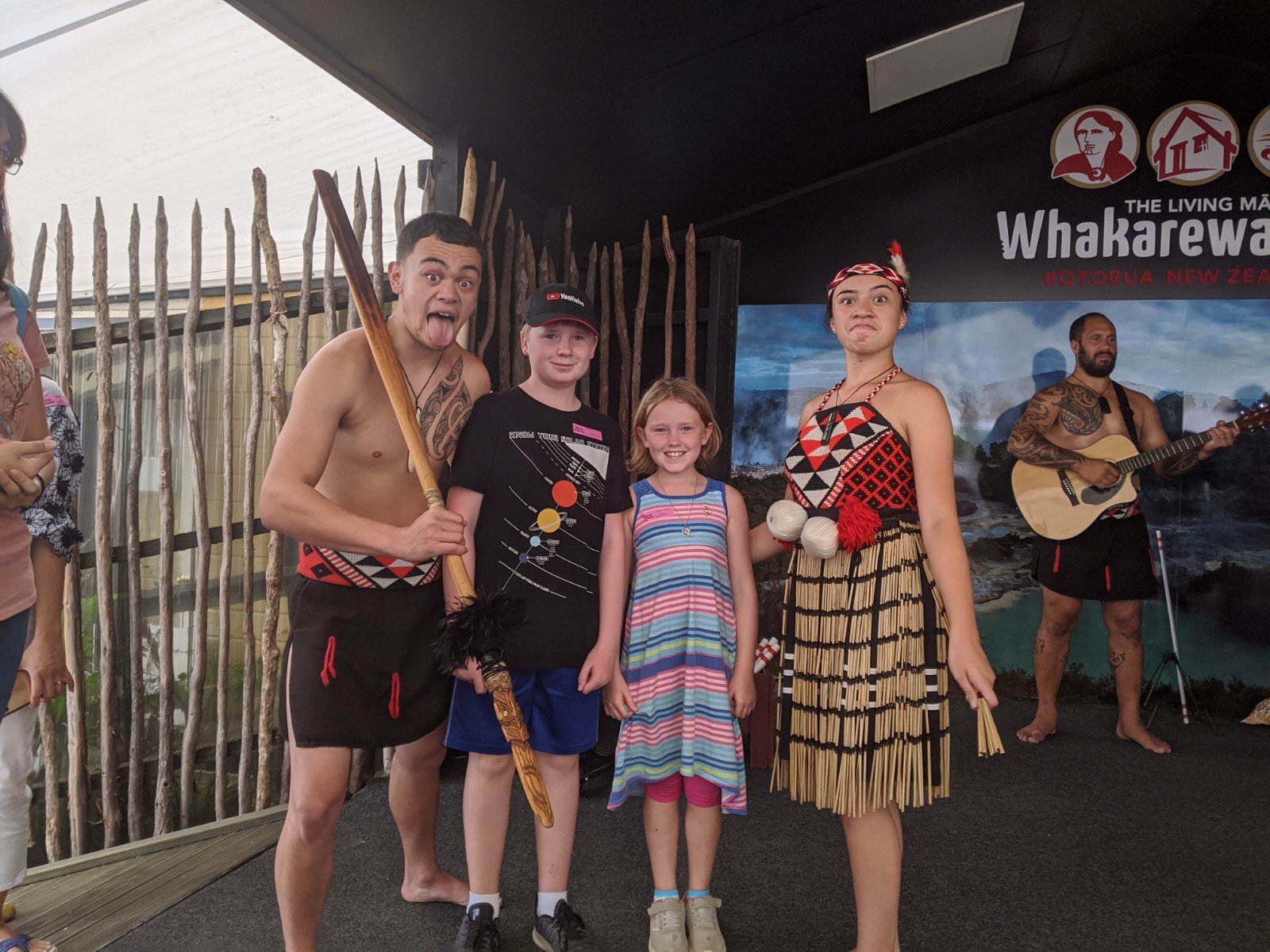
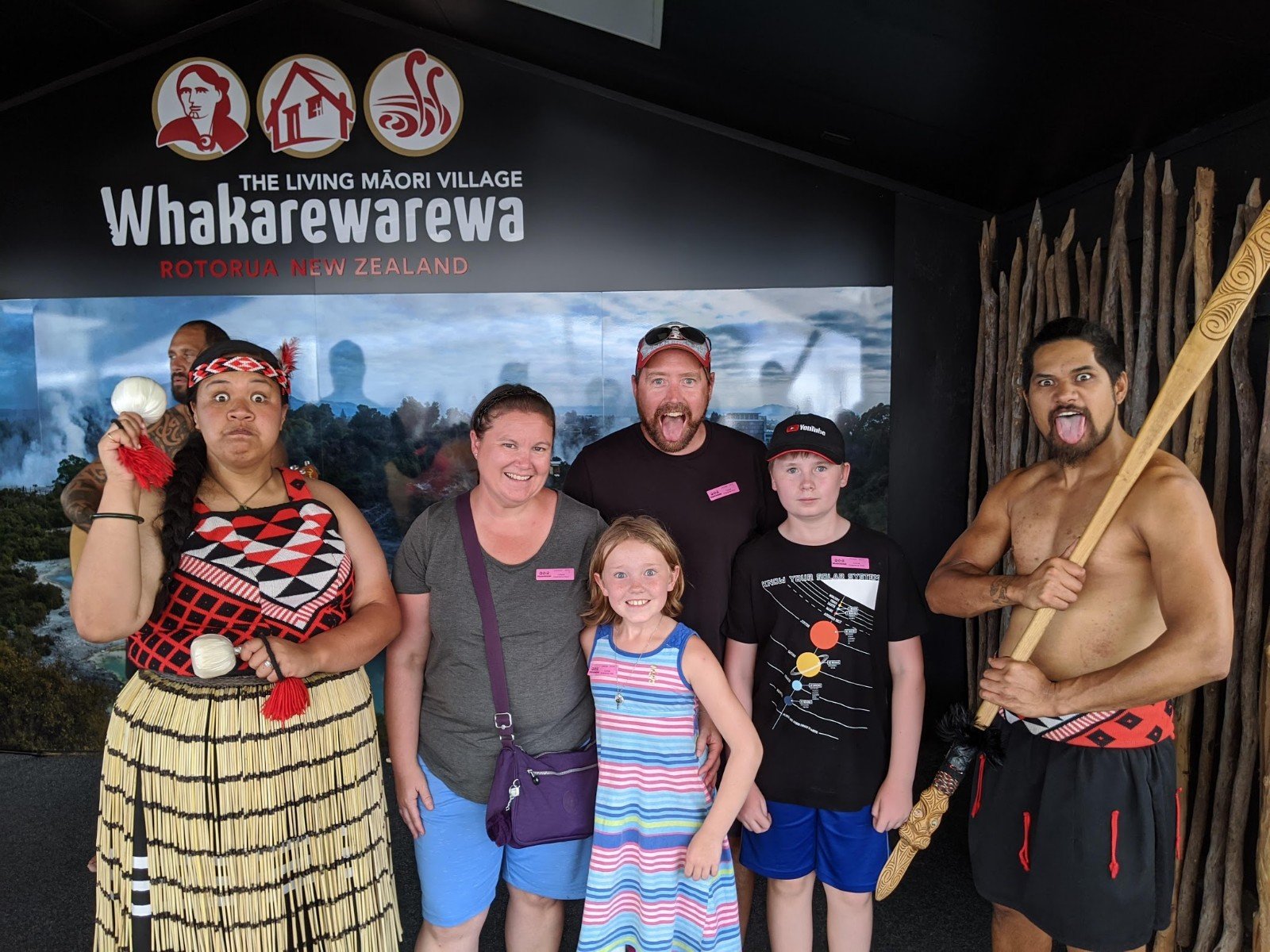
There were about 9 or 10 people from the village doing special dances made by the Maori people. There were five dances in the show. I loved all of them. They were so cool and different from dances I’ve seen before.


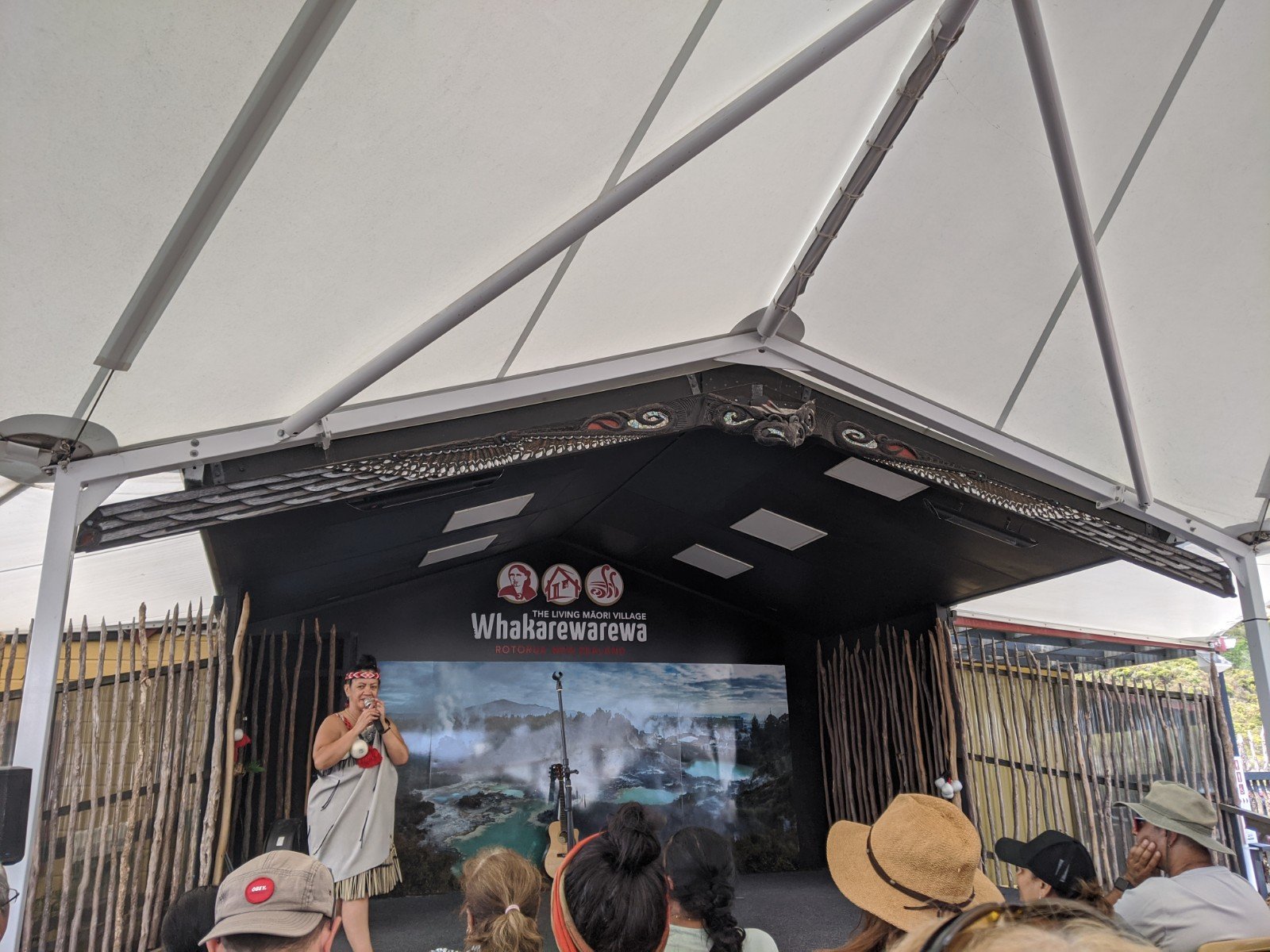
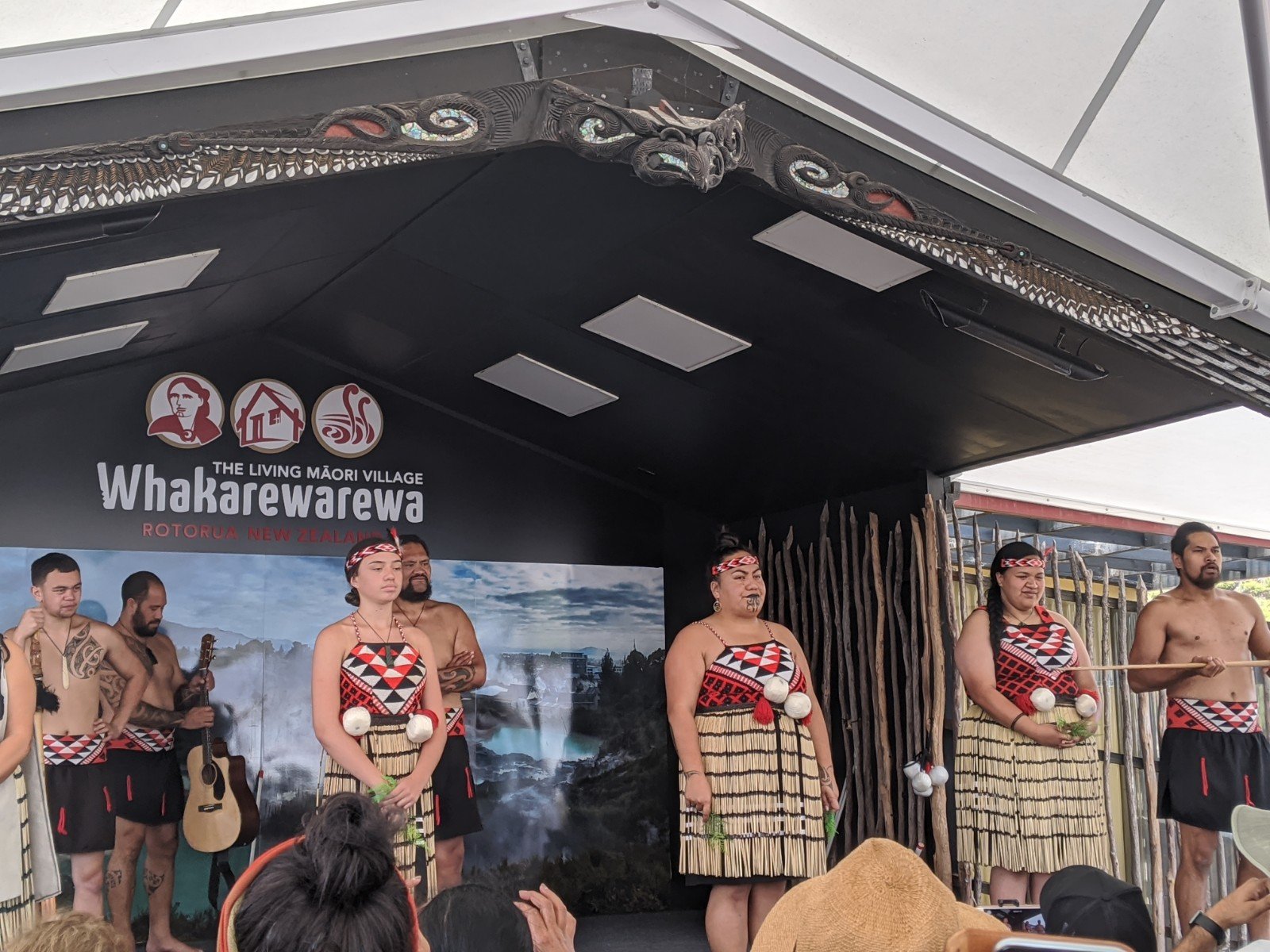
There was a stick game dance where they all tossed sticks to one another in special movements and made music with them. It was so interesting how they threw them at the exact same time. It was kind of like group juggling.
In another dance, the women had strings with balls on the end, called poi. They spun them in patterns and slapped them against their hands and backs to make a beat.
They performed a special Maori love song that tells the story of how their village came to be. They are all really good singers.
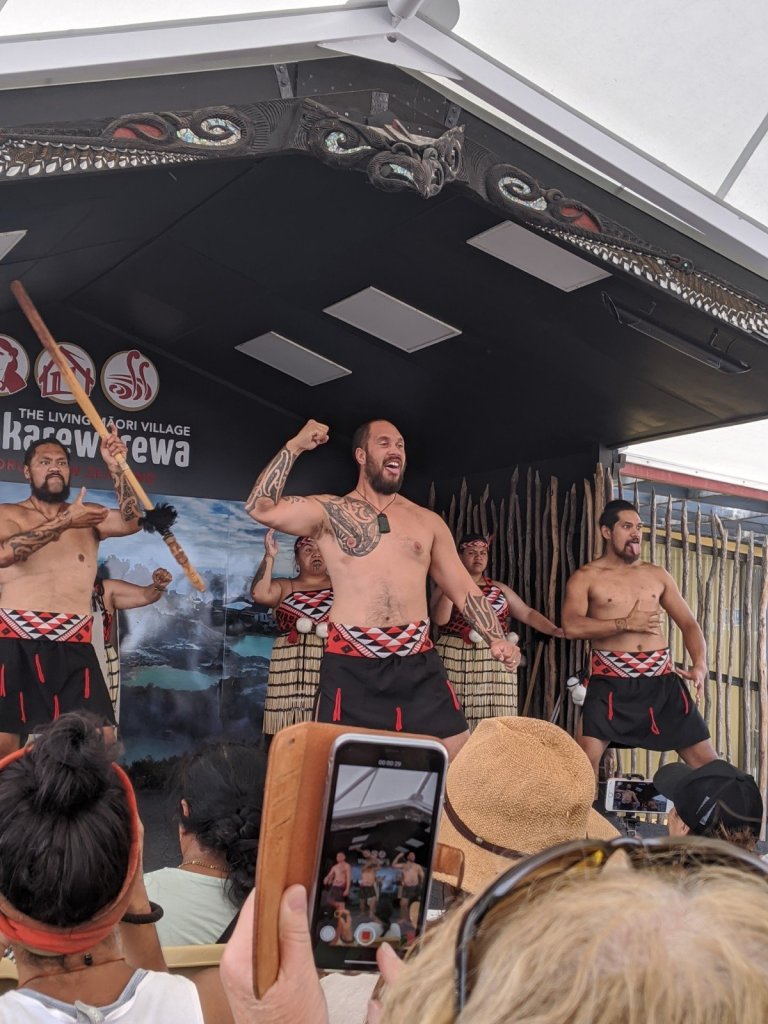
The last dance was called the haka, which is the war dance. The thing that is interesting about that dance is that to scare their enemies they make their eyes big and the men stick their tongues out. They all act angry.

Sam:
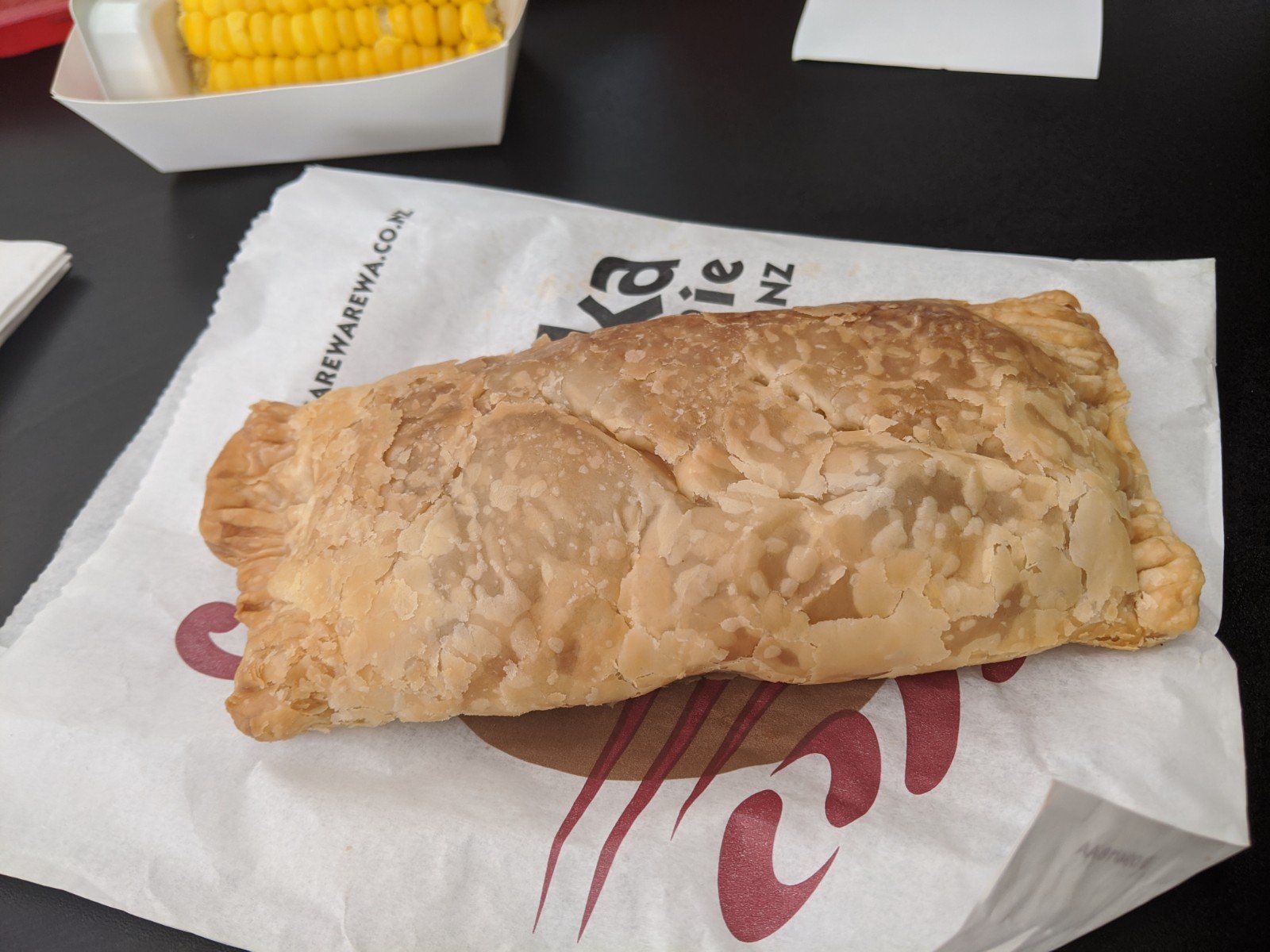
After the show, we were getting hungry so we went to a restaurant that had traditional hangi in a hand pie and some corn on the cob that was boiled in a big hot pool (geothermal). Hangi is meat and vegetables cooked in a steam box underground. After lunch, we went to get some frozen yogurt at a gift shop.



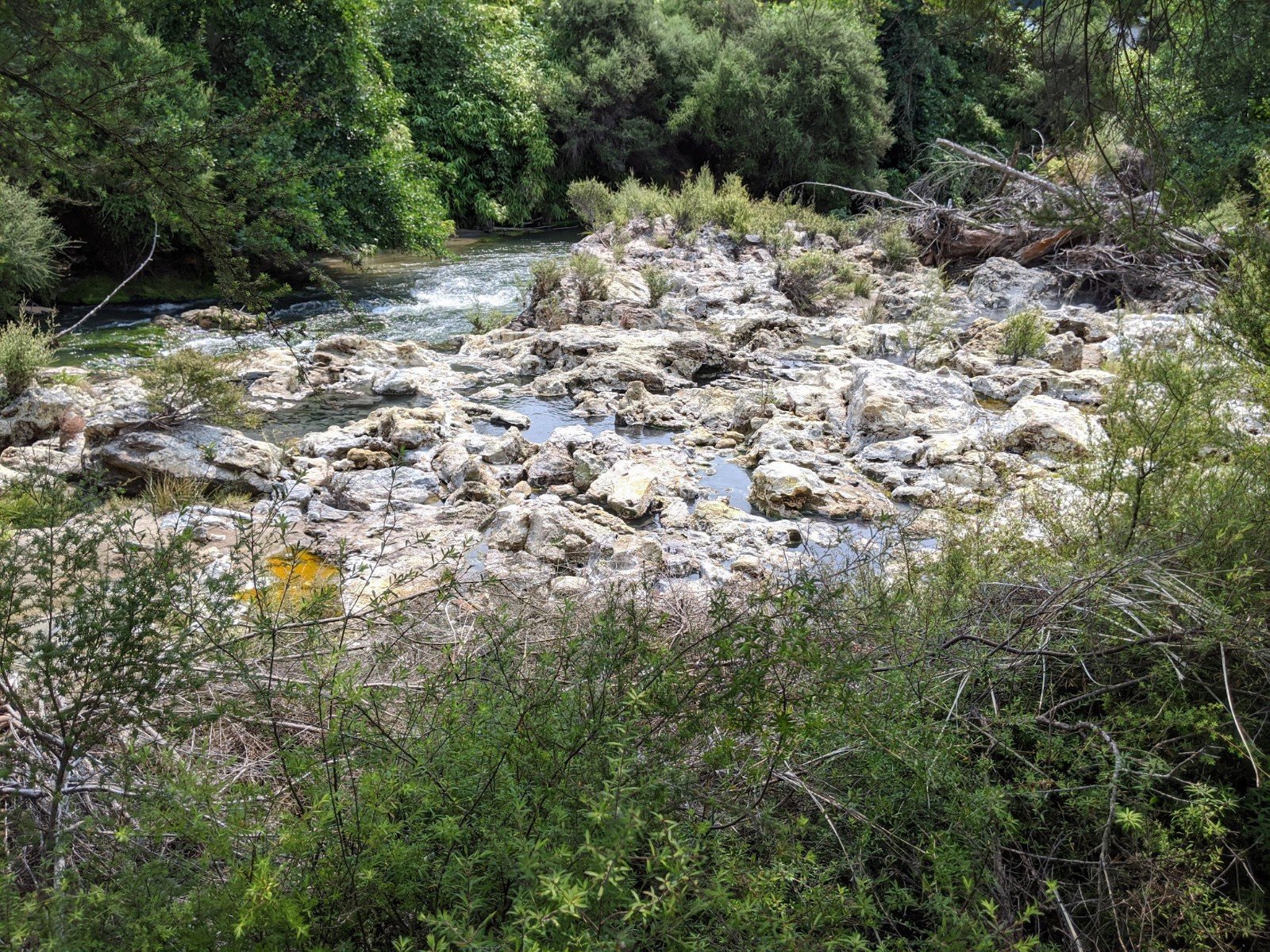
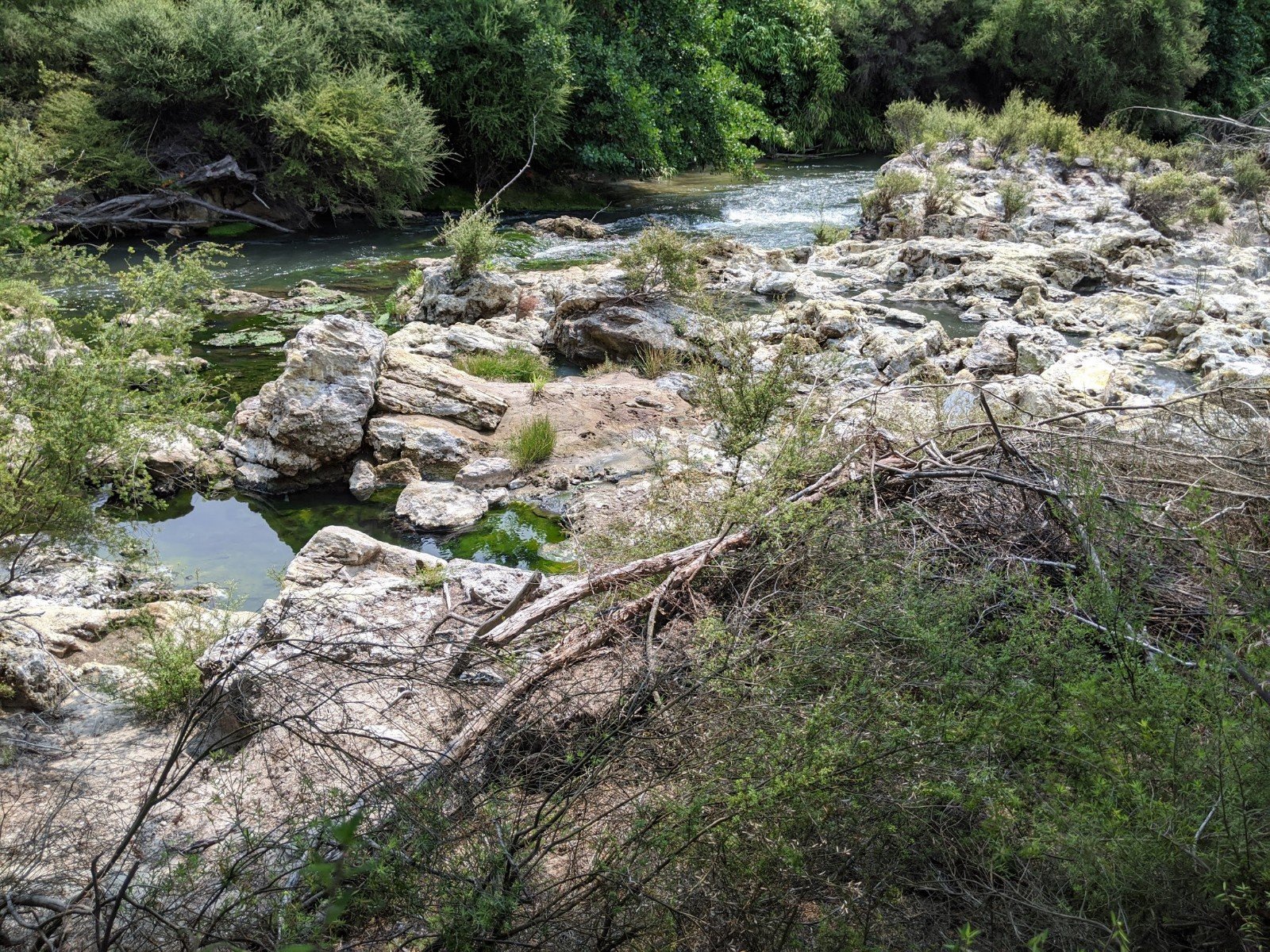
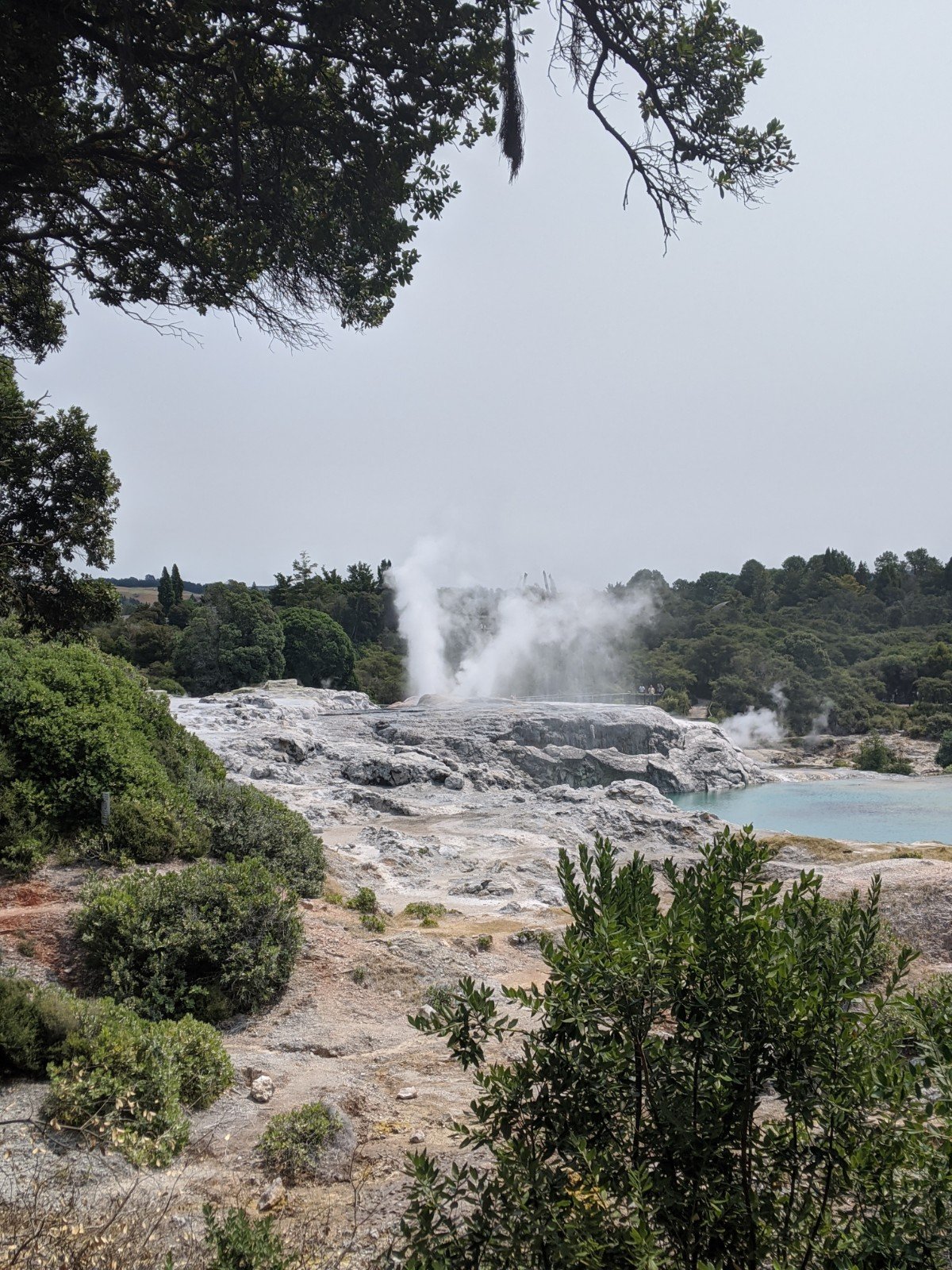
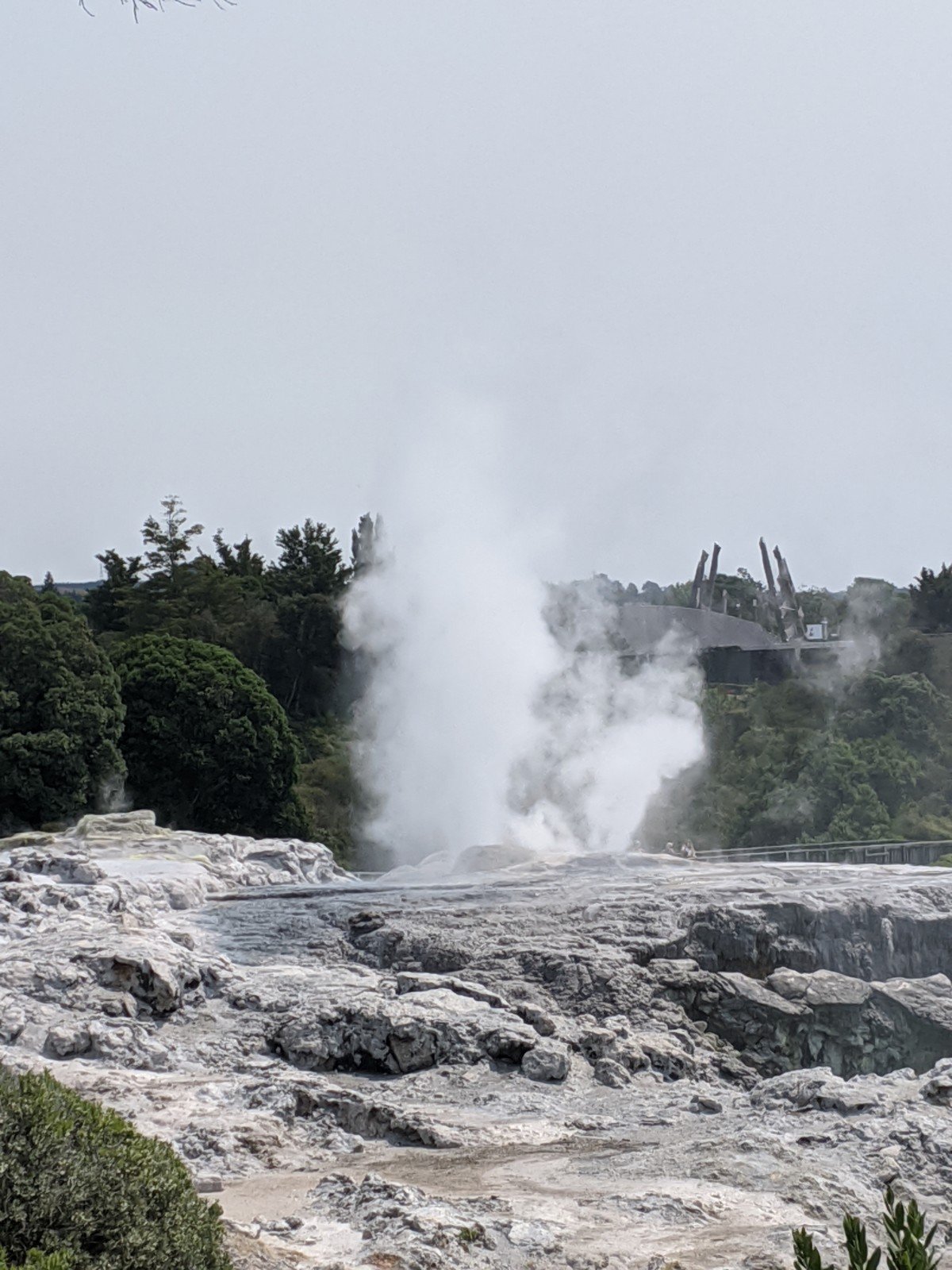
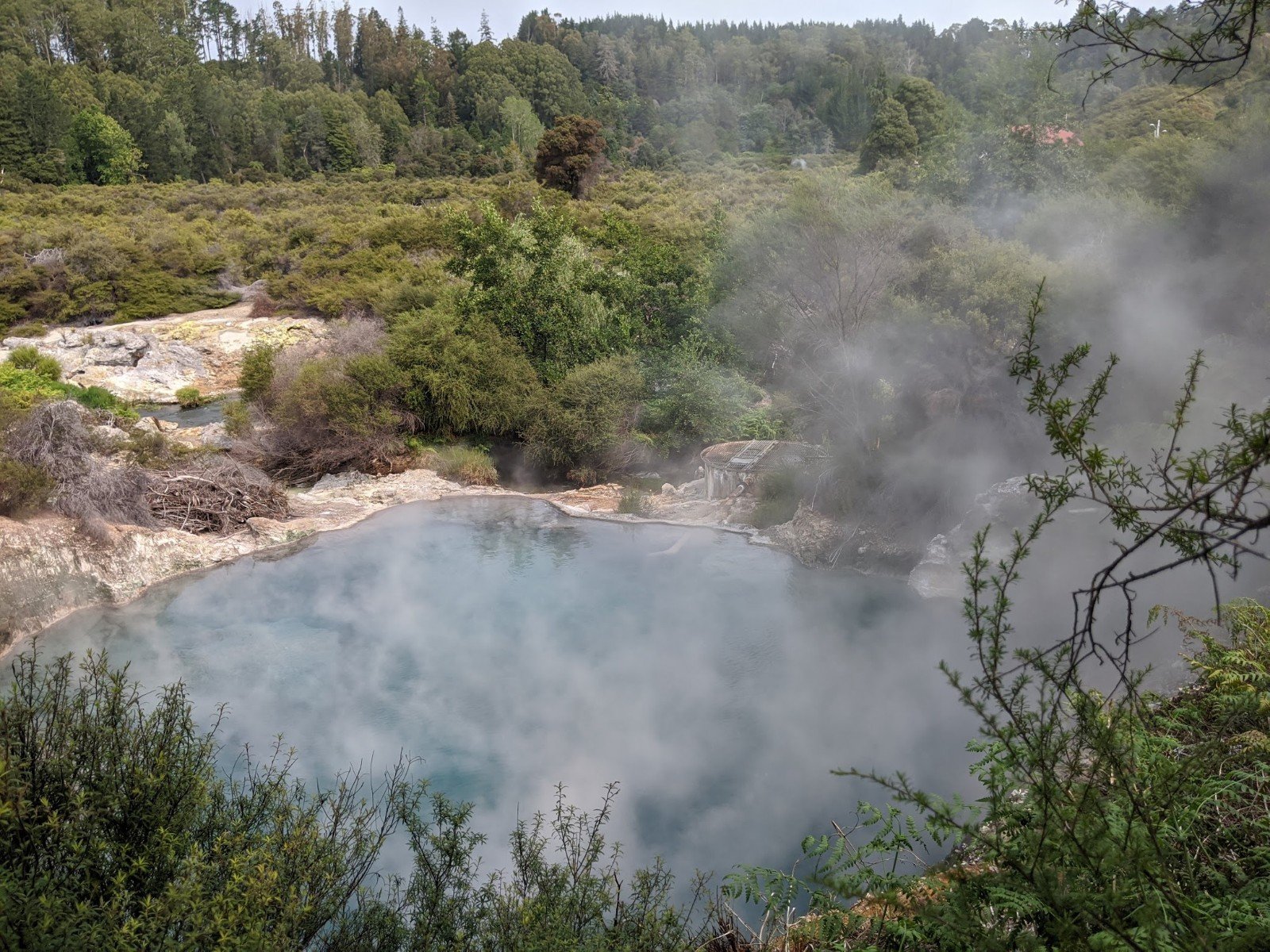
We walked back to the stage to take a tour of the village, and our guide’s name was Miti (short for a really long name). We first went to a lookout over three geysers while two of them were spewing water, and she told us that it was their “backyard” because they consider their village to be not a community but a home.

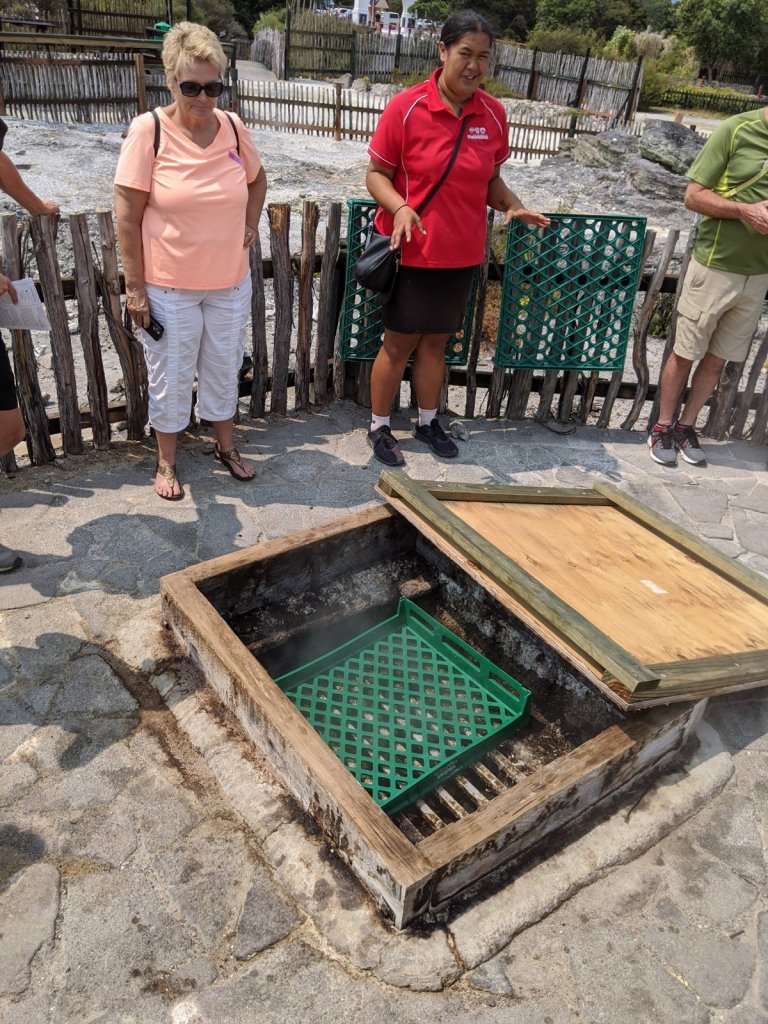
We then went to the communal kitchen, which is completely outside. They cook most of their food in steam boxes (steam vents underneath a wooden container). They can even make cakes in the steam boxes.
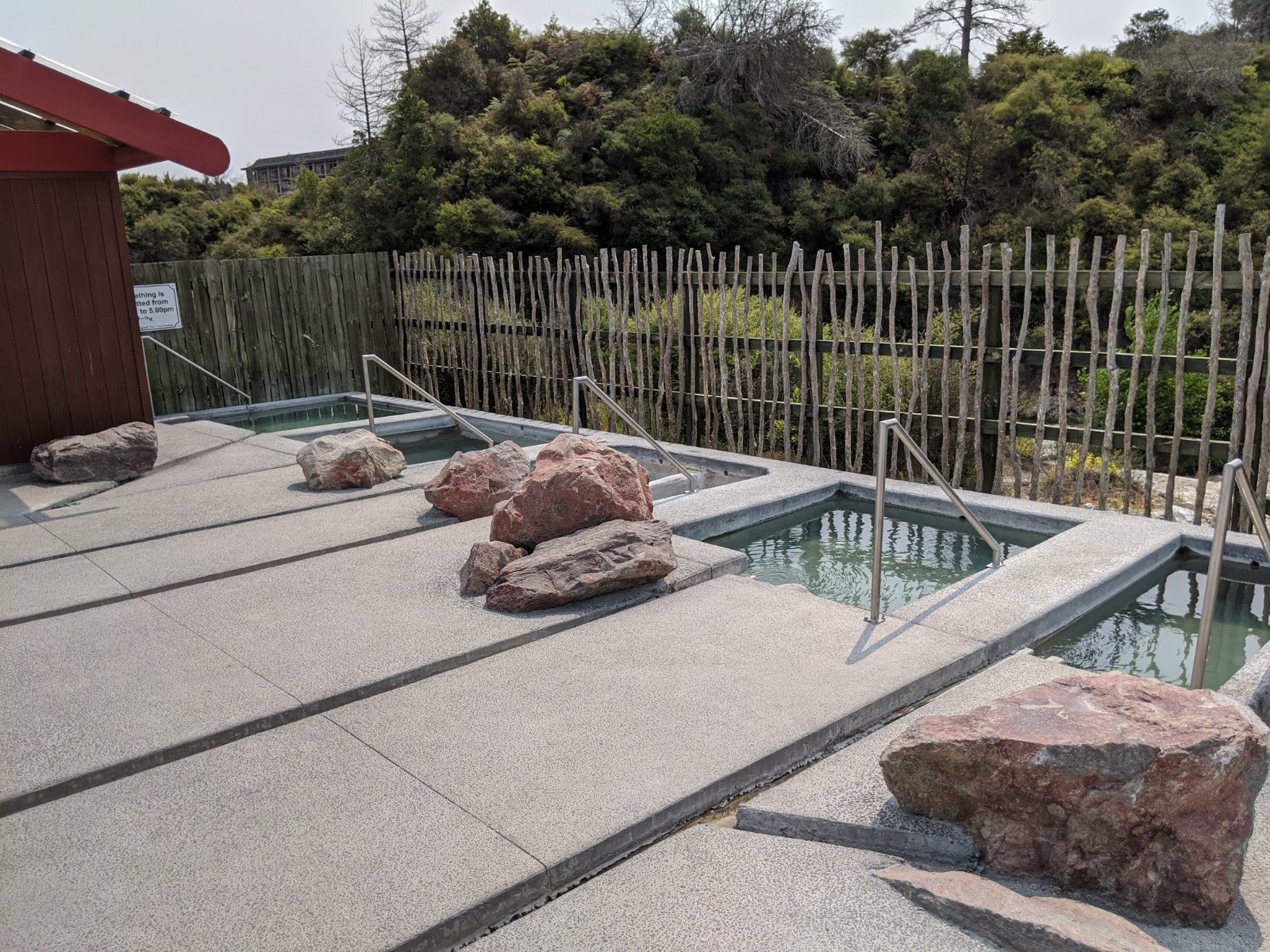
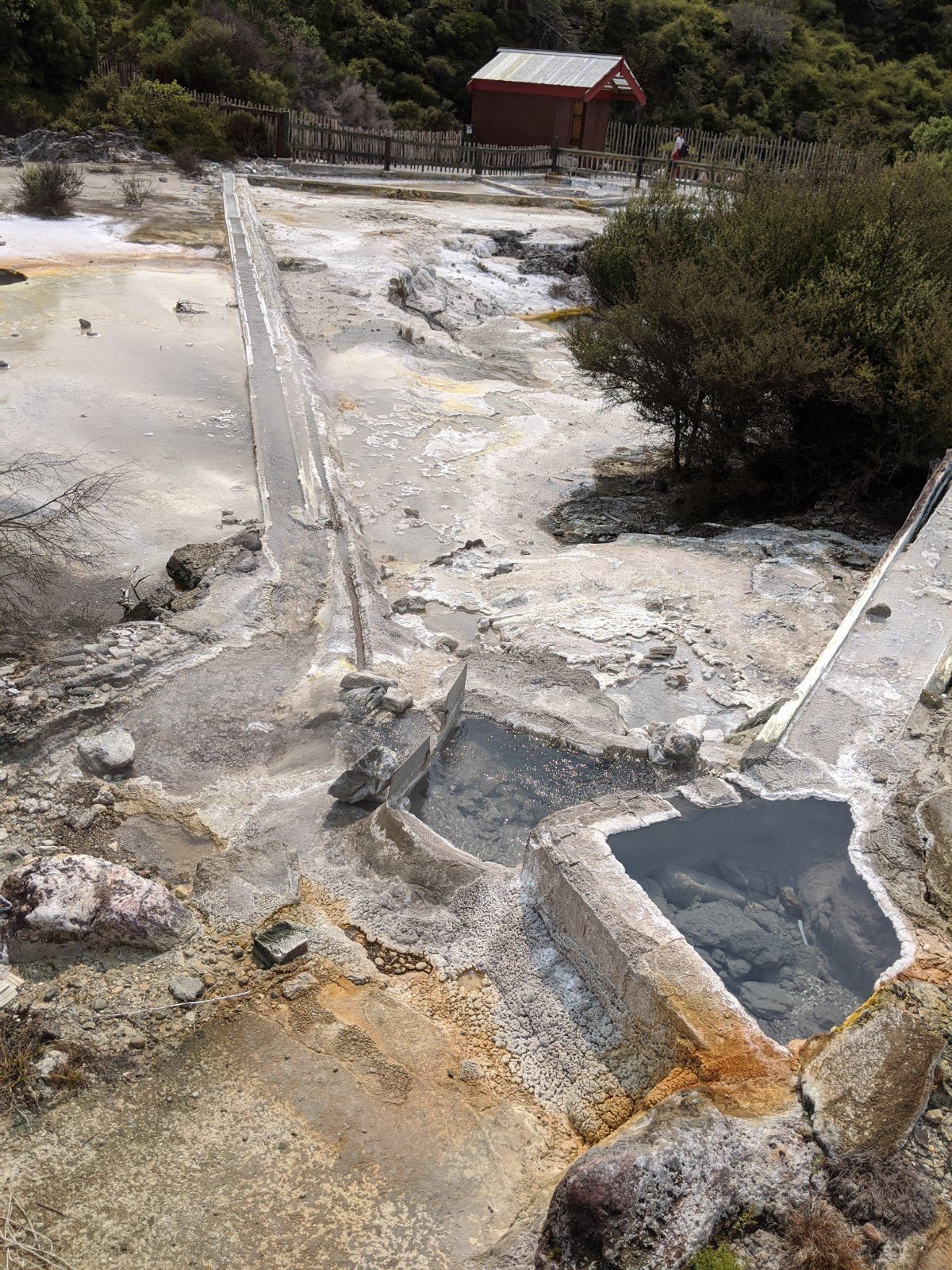
Next we went to the bathroom (also outside) where they take baths in water fed from a hot spring so they wouldn’t have to heat it. Miti said that up to ten people can go in a bath at a time. They are not shy about their bodies and they bathe together as a family. There is lots of gossiping while people are bathing.


She told us that when their tribe first got to the valley, they only ate birds and berries but another tribe tried to attack them to steal the land, but they defended themselves and killed the leader. They were wondering what to do with all the bodies, and then one dude had a great idea. “Let’s throw them in a steam box for supper!” The Maori used to be cannibals.
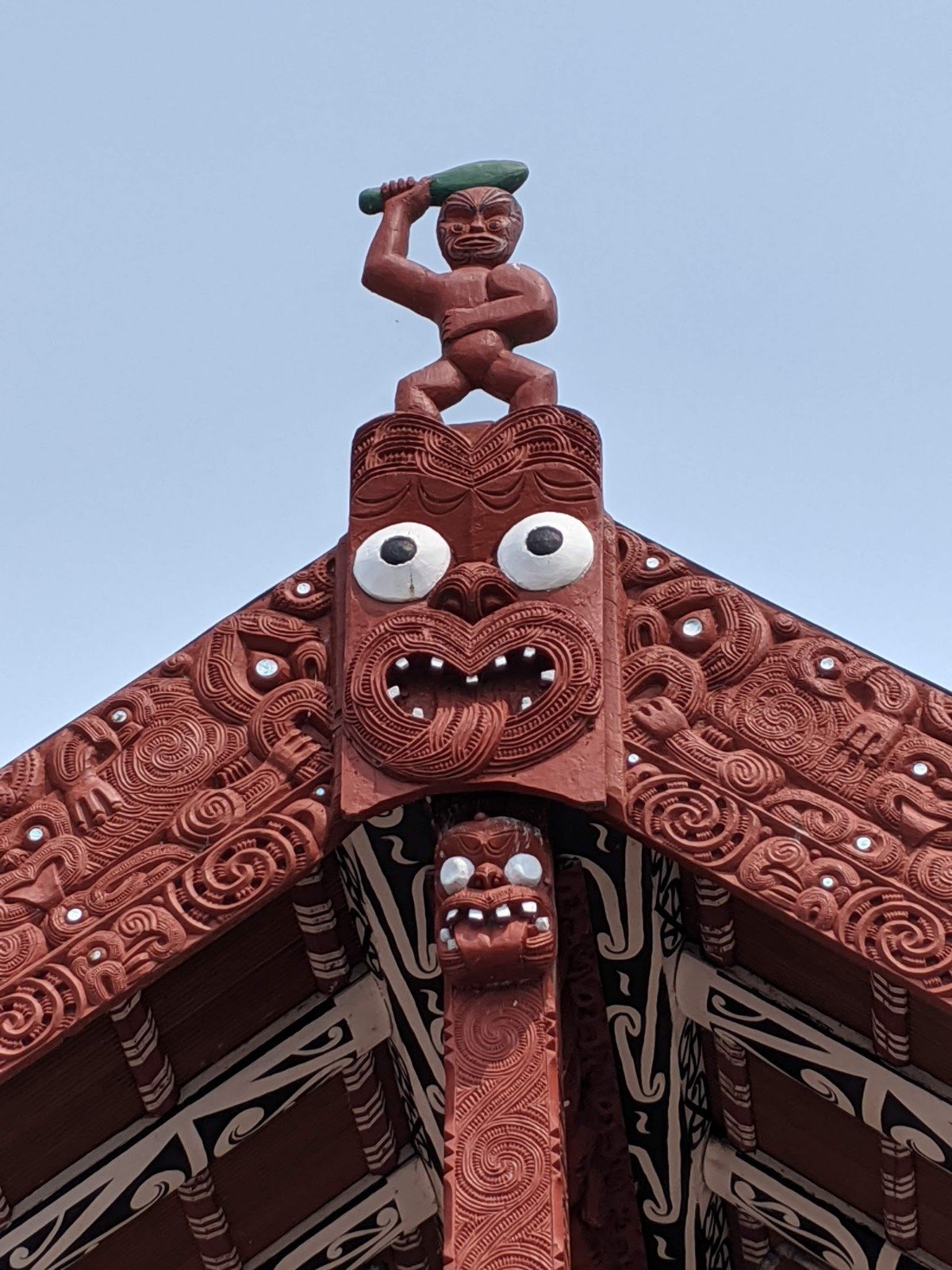
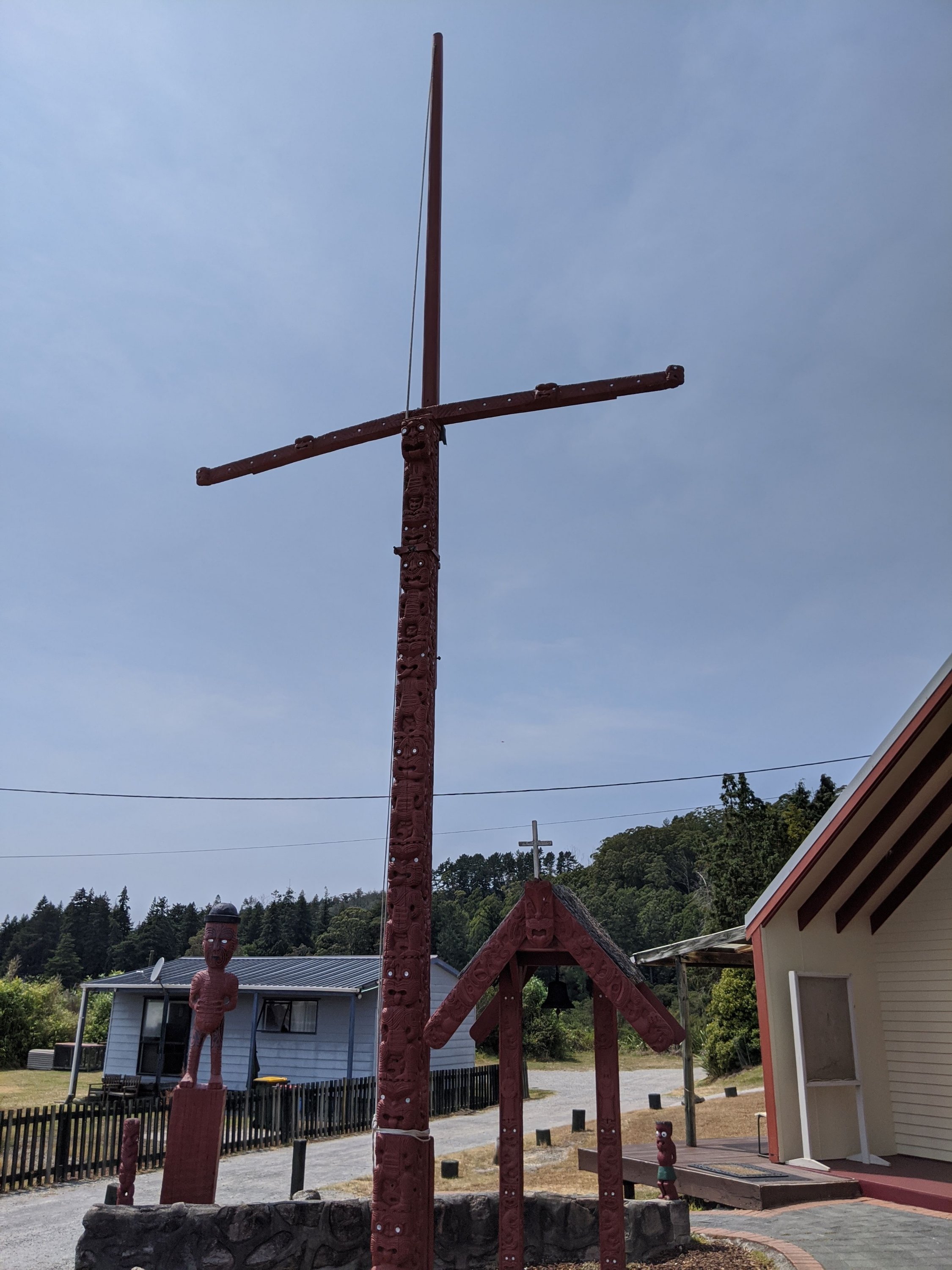
We then learned that when European settlers came, the tribe was separated into either Catholic or Anglican in a very funny way. The tribe leader gathered the tribe in the main square and told them, “Everyone on the left side of me, you are Catholic. Everyone on the right side of me, you are Anglican.” The people wanted to know what the difference was between the two religions, so their leader said, “One is Italian and the other is English.” This was a good enough explanation for them. Some of the villagers still follow these religions, but many have returned to their own traditional religious beliefs, which include a Go god of the sky and goddess of the Earth and their many children who are gods of many different things, such as war.
We learned so much today, and it was really interesting.

How to say “Tewhakarewarewatangaoteopetauaawahiao”: Tay-fa-ka-ray-wa-ray-wa-tonga-o-tay-o-pay-ta-wa-awa-he-ow (don’t forget to roll your r’s)

 Sam and Charlotte take on the world!
What a fascinating place. I’m sure that you did learn a lot. The pictures are beautiful. There is a lot of history about the Maori people. There is a famous opera star, Kiri Te Kanawa, who is Maori. Thank you for sharing your wonderful adventures.
LikeLike
And what, exactly, does that very long word mean? It is really fun to say! The pictures are great, and so are the film clips of the dances! What a fun adventure! Thanks for writing the blog, kids, I always look forward to it!
LikeLike